

How to Choose a Reliable Supplier in the Jewelry Packaging Industry

In the jewelry industry, packaging is a critical extension of brand identity—whether it’s a luxury velvet ring box for engagement rings or a sustainable paper pouch for everyday pieces. The reliability of your packaging supplier directly impacts your business: delays, subpar quality, or inconsistent deliveries can disrupt product launches, damage customer trust, and erode profit margins. For jewelry brands (from boutique designers to large retailers), choosing a supplier that balances quality, consistency, flexibility, and transparency is not just a procurement decision—it’s a strategic investment in long-term success.
1. Start with Clear Internal Requirements: Define Your Needs First
Before evaluating suppliers, clarify your packaging needs to avoid misalignment and wasted resources. Reliable suppliers thrive on specificity—vague requests (e.g., “a luxury box”) lead to inconsistent results, while detailed requirements ensure both parties are aligned.
A. Product-Specific Requirements
- Material specifications: Outline the exact materials you need (e.g., “full-grain Italian leather,” “100% recycled rigid paperboard with FSC certification,” “anti-tarnish velvet lining”). Include quality grades (e.g., “300gsm coated cardboard”) to avoid substitutions with lower-grade materials.
- Design and craftsmanship: Define critical details like printing techniques (e.g., gold foil stamping, UV printing), customization (e.g., laser engraving of logos, custom foam inserts), and finish standards (e.g., “no visible glue seams,” “uniform color matching to Pantone 1837”).
- Functional needs: Specify performance requirements (e.g., “magnetic closure that operates smoothly for 1,000+ uses,” “water-resistant coating for outdoor pop-up displays,” “light box batteries with 50+ hours of life”).
B. Operational Requirements
- Volume and lead time: Clarify order quantities (e.g., “500 units per month for regular stock, 2,000 units for holiday peaks”) and lead times (e.g., “10–12 business days for standard orders, 5–7 days for rush orders”). Reliable suppliers will confirm if they can meet these timelines consistently, not just for one order.
- Sustainability goals: If eco-friendliness is a priority, outline certifications (e.g., FSC, BPI for biodegradable materials) or waste reduction targets (e.g., “packaging with <5% plastic content”). Avoid vague terms like “sustainable”—specificity ensures suppliers can prove compliance.
Focus on leading manufacturers: Syonpack
Syonpack is a leading jewelry box wholesaler in China, focusing on custom jewelry packaging solutions. With over 15 years of experience in custom packaging manufacturing, Syonpack has served more than 300 jewelry brands, wholesalers and retailers around the world. Their expertise covers high-quality, tailor-made jewelry boxes, gift boxes, paper cosmetic packaging and other packaging types solutions and is carefully designed to meet the diverse needs of the luxury packaging industry.
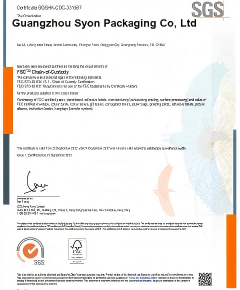
2. Vet Supplier Credentials: Verify Experience and Reliability
A reliable supplier’s track record speaks louder than marketing claims. Focus on verifying their industry experience, certifications, and customer references to assess their ability to deliver on promises.
A. Industry Experience and Specialization
- Jewelry packaging focus: Prioritize suppliers that specialize in jewelry packaging over general packaging providers. Jewelry packaging has unique demands (e.g., delicate linings for gemstones, precise inserts for rings) that general suppliers may not understand. For example, a supplier that has worked with luxury jewelry brands (e.g., Cartier, Tiffany) is more likely to handle high-end materials (e.g., full-grain leather) than one that primarily makes shipping boxes.
- Years in business: While newer suppliers can be innovative, those with 5+ years in the industry have likely weathered supply chain disruptions (e.g., material shortages) and refined their processes. Ask about their experience with similar brands (e.g., “Have you worked with boutique jewelry designers on small-batch custom orders?”).
B. Certifications and Quality Control
- Quality certifications: Look for suppliers with ISO 9001 (quality management) or ISO 14001 (environmental management) certifications—these indicate structured quality control (QC) processes. For sustainable packaging, verify third-party certifications (e.g., FSC for wood, BPI for compostable plastics) to avoid “greenwashing.”
- QC protocols: Ask how they ensure consistency:
- Do they inspect materials upon receipt (e.g., checking leather for defects, testing cardboard thickness)?
- Do they perform in-line checks during production (e.g., verifying print color accuracy, testing closure strength)?
- Do they conduct final inspections before shipping (e.g., checking for scratches, misaligned linings)?
A reliable supplier will share specific QC steps (e.g., “We inspect 10% of each order for color matching using a spectrophotometer”) rather than vague claims like “we have strict QC.”
C. Customer References and Case Studies
- Request references: Ask for 2–3 references from brands similar to yours (e.g., if you’re a boutique designer, ask for references from other boutiques). Follow up with questions like:
- “Did the supplier meet lead times consistently?”
- “How did they handle quality issues (e.g., a batch of boxes with defective hinges)?”
- “Were they flexible when you needed to adjust an order (e.g., changing the logo engraving)?”
- Review case studies: Many suppliers share case studies on their website (e.g., “How we created custom light boxes for X jewelry brand”). Look for examples that align with your needs (e.g., small-batch customization, sustainable materials) to gauge their problem-solving ability.
3. Evaluate Technical Capabilities: Ensure They Can Deliver Your Vision
Even if a supplier has a strong track record, they must have the technical skills and equipment to meet your specific packaging requirements.
A. Material Sourcing and Customization
- Material access: Confirm they can source the exact materials you need. For example, if you require rare materials (e.g., exotic wood, recycled ocean plastic), ask:
- “Do you have established relationships with suppliers for this material?”
- “Can you provide samples of the material before production?”
A reliable supplier will not overpromise—if they can’t source a material, they’ll suggest high-quality alternatives (e.g., “We don’t have access to teak, but we can offer sustainably sourced walnut that matches your design”).
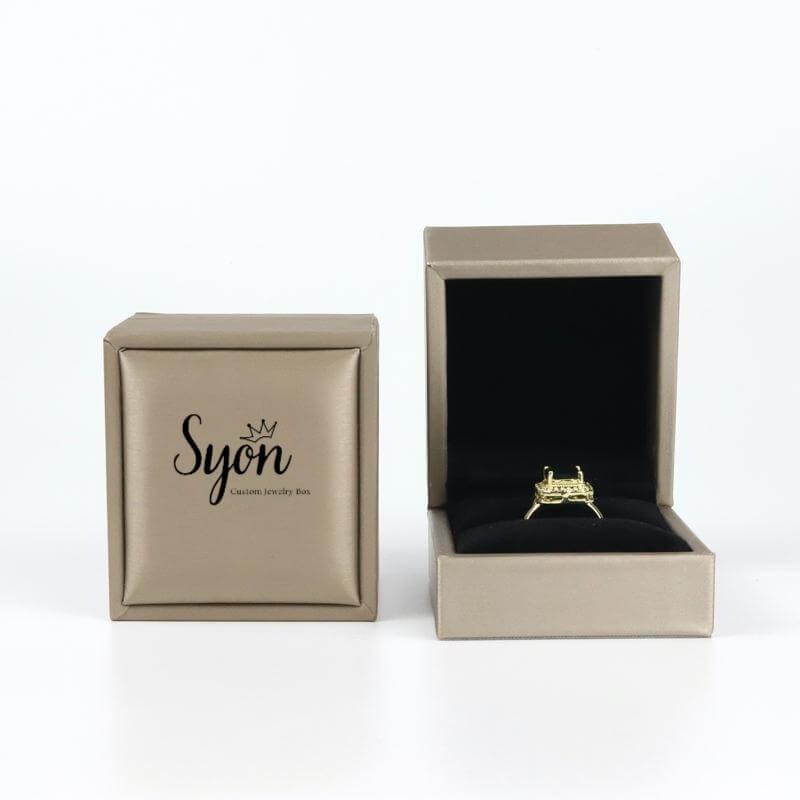
- Customization capabilities: If you need custom designs (e.g., bespoke light boxes, hand-engraved leather), ask about their equipment and expertise:
- For printing: Do they offer techniques like embossing, debossing, or digital printing? Can they match your brand’s exact Pantone color?
- For structural design: Can they create custom inserts (e.g., molded foam for a unique necklace) or non-standard shapes (e.g., heart-shaped boxes)?
Request samples of their custom work (e.g., a sample of a laser-engraved box) to assess quality firsthand.
B. Production Capacity and Flexibility
- Capacity to meet your volume: Ensure the supplier can handle your current and future volume. For example, if you plan to scale from 500 to 5,000 units per month, ask:
- “What is your maximum production capacity for this type of box?”
- “Will scaling up affect lead times or quality?”
A supplier that specializes in small batches may struggle with large orders, and vice versa.
- Flexibility for changes: Jewelry brands often need to adjust orders (e.g., adding a last-minute holiday design, increasing a rush order). Ask:
- “What is your policy for order changes (e.g., can we modify the quantity 5 days before production)?”
- “What is the cost of rush orders (e.g., a 5-day turnaround instead of 10 days)?”
Reliable suppliers balance structure with flexibility—they won’t penalize you for reasonable changes but will set clear expectations (e.g., “Rush orders add 20% to the cost and require approval 7 days in advance”).

4. Assess Communication and Post-Sales Support: Avoid Partnership Headaches
Reliable suppliers are not just “vendors”—they are partners. Strong communication and post-sales support ensure smooth collaboration, even when issues arise.
A. Communication Responsiveness and Transparency
- Response time: Test how quickly they respond to inquiries (e.g., a question about material samples). A reliable supplier will typically respond within 24–48 hours, even for complex questions. Delays (e.g., 5+ days to reply) are a red flag—they may be too busy or disorganized to prioritize your account.
- Transparency about challenges: Ask about potential risks (e.g., “What if there’s a shortage of velvet?”) and how they plan to mitigate them. A reliable supplier will be upfront (e.g., “Velvet lead times are currently 4 weeks, so we recommend ordering materials 2 weeks in advance”) instead of hiding potential delays.
- Point of contact: Confirm you’ll have a dedicated account manager (not a rotating team) who understands your needs. This ensures consistency in communication (e.g., you won’t have to explain your design requirements to a new person every time).
B. Post-Sales Support and Issue Resolution
- Warranty and defect policies: Ask about their policy for defective products (e.g., “If 5% of the boxes arrive with broken hinges, what happens?”). A reliable supplier will offer a clear solution (e.g., “We’ll replace the defective units within 3 business days at no cost”) instead of blaming you (e.g., “You must have damaged them during shipping”).
- Returns and exchanges: Clarify how they handle returns for overstock or incorrect orders (e.g., “Can we return unused boxes if we overorder, and what is the restocking fee?”).
- Long-term support: For ongoing partnerships, ask about their ability to adapt to your evolving needs (e.g., “If we launch a new product line requiring different packaging, can you help design it?”). Reliable suppliers invest in long-term relationships, not just one-time orders.

Conclusion
Choosing a reliable jewelry packaging supplier requires intentionality— it’s not just about finding a company that can make boxes, but a partner that understands your brand, meets your quality standards, and supports your growth. By defining your needs clearly, vetting credentials, evaluating technical capabilities, assessing
Remember: The best supplier is not always the cheapest or the most well-known—it’s the one that consistently delivers on their promises, communicates transparently, and adapts to your needs. With the right supplier, your packaging will not just protect your jewelry, but elevate it—creating memorable experiences for your customers.