

Types of Velvet and Their Respective Characteristics for Jewelry Packaging
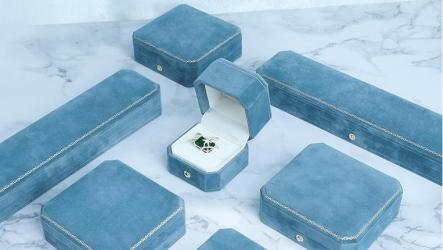
In the jewelry packaging industry, velvet stands as a timeless material choice, celebrated for its plush texture, luxurious appearance, and ability to elevate the perceived value of jewelry. However, not all velvet is created equal—different types vary significantly in raw materials, pile structure, durability, and aesthetic appeal, making each suited to specific packaging needs. For jewelry brands and packaging designers, understanding the nuances of common velvet types is critical to selecting a material that aligns with brand identity (e.g., luxury, sustainability, affordability), protects delicate jewelry, and delivers a memorable tactile experience. This article breaks down the most widely used velvet types in jewelry packaging, their core characteristics, and ideal applications.
1. Cotton Velvet: Natural Softness for Eco-Conscious Brands
Cotton velvet—woven from 100% cotton fibers (or a cotton blend)—is a staple for brands prioritizing natural materials and a soft, approachable luxury. Its popularity in jewelry packaging stems from its breathability, hypoallergenic properties, and subtle, matte finish.
Key Characteristics
- Texture: Cotton velvet has a medium-length pile (typically 2–3mm) with a plush, slightly matte feel—softer to the touch than synthetic alternatives but less “shiny” or “sleek.” The pile is dense but has a gentle give, creating a warm, inviting tactile experience.
- Durability: Moderate durability; cotton fibers are resistant to pilling but may flatten over time with frequent handling (e.g., repeated opening/closing of a jewelry box). It is also prone to staining from liquids or jewelry polish, requiring careful maintenance.
- Color and Dyeing: Absorbs dyes well, resulting in rich, deep hues (e.g., burgundy, forest green, ivory). However, cotton is susceptible to color fading when exposed to direct sunlight, so it is best used for indoor storage or packaging that won’t be displayed in bright areas.
- Sustainability: A more eco-friendly option than synthetic velvets, especially if sourced from organic cotton (GOTS-certified). Cotton velvet is biodegradable at the end of its lifecycle, aligning with brands focused on reducing plastic waste.
Ideal Jewelry Packaging Applications
Cotton velvet excels in packaging for:
- Eco-conscious brands (e.g., sustainable jewelry lines using recycled metals or lab-grown gemstones).
- Delicate jewelry (e.g., pearl earrings, thin silver chains) that requires a soft, non-abrasive lining to prevent scratches.
- Everyday or mid-tier jewelry (e.g., stackable rings, dainty necklaces) where a warm, approachable luxury is desired—think packaging for brands like Mejuri’s “Everyday Fine” collection.

2. Silk Velvet: Premium Luxury for High-End Jewelry
Silk velvet—woven from pure silk fibers (or a silk blend, often with viscose)—is the gold standard for luxury jewelry packaging. Its unparalleled softness, luminous sheen, and delicate drape make it a favorite for high-value jewelry, where packaging must match the product’s exclusivity.
Key Characteristics
- Texture: Silk velvet has an ultra-fine, short pile (1–2mm) with a buttery, smooth feel that is unmatched by other velvet types. The pile reflects light subtly, creating a luminous, iridescent effect (known as “sheen”) that adds depth to the material—this is its most defining feature.
- Durability: Low to moderate durability; silk fibers are delicate and prone to damage from moisture, friction, or sharp objects (e.g., diamond edges). Silk velvet is not ideal for frequent handling or travel packaging, as it may tear or pill easily.
- Color and Dyeing: Holds vibrant, rich colors with exceptional clarity—dyes penetrate silk fibers deeply, resulting in hues that appear more saturated than cotton or synthetic velvets. It also takes well to metallic or iridescent dyes, making it perfect for luxury accents.
- Cost: Significantly more expensive than cotton or synthetic velvets (often 2–3x the price) due to the labor-intensive production of silk and the delicate weaving process.
Ideal Jewelry Packaging Applications
Silk velvet is reserved for high-end, occasional-use packaging, such as:
- Luxury jewelry (e.g., diamond engagement rings, emerald necklaces, designer watches) from legacy brands like Cartier or Van Cleef & Arpels.
- Gift packaging for special occasions (e.g., bridal jewelry, anniversary gifts) where the unboxing experience needs to feel opulent and memorable.
- Limited-edition or collector’s items (e.g., a one-of-a-kind gemstone pendant) where packaging is part of the product’s exclusivity.
3. Polyester Velvet: Durable Affordability for Everyday Use
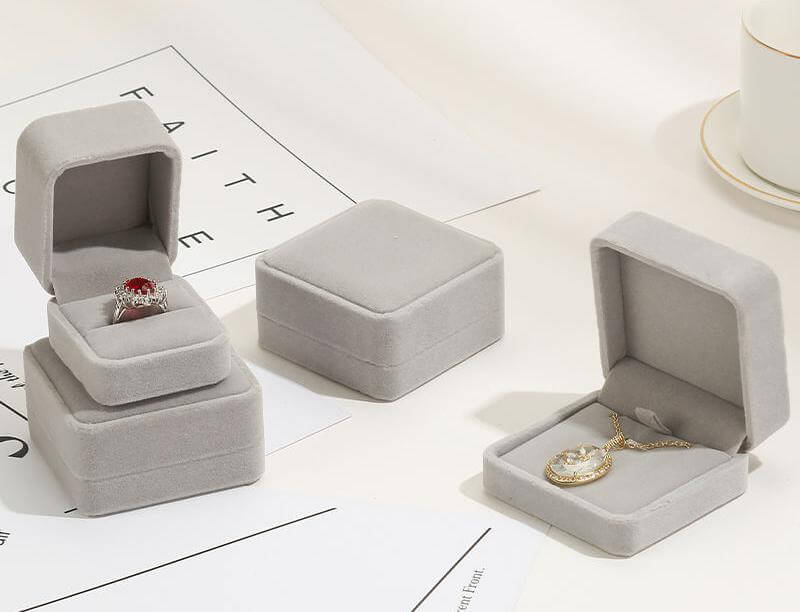
Polyester velvet—woven from 100% polyester fibers (or a polyester blend, often with spandex)—is the most practical and cost-effective velvet type for jewelry packaging. Its durability, stain resistance, and low maintenance make it a top choice for brands prioritizing functionality and affordability.
Key Characteristics
- Texture: Polyester velvet has a medium to long pile (3–4mm) with a smooth, slightly shiny feel. The pile is dense and resilient, meaning it bounces back quickly after being pressed (unlike cotton, which may flatten) —this “recovery” makes it ideal for packaging that is opened and closed frequently.
- Durability: High durability; polyester fibers are resistant to pilling, staining, moisture, and sunlight fading. They also withstand friction well, making polyester velvet suitable for travel jewelry cases or packaging for bulkier jewelry (e.g., charm bracelets, hoop earrings).
- Color and Dyeing: Available in a wide range of colors, including bright, neon hues (unlike natural velvets, which are limited to more muted tones). Polyester holds color well over time, even with exposure to light or moisture.
- Cost: The most affordable velvet option, making it accessible for small brands, mid-tier jewelry lines, or high-volume packaging orders (e.g., holiday gift sets).
Ideal Jewelry Packaging Applications
Polyester velvet is versatile and works for most jewelry packaging needs, including:
- Everyday jewelry packaging (e.g., stud earrings, casual necklaces) for fast-fashion or affordable fine jewelry brands.
- Travel jewelry cases (e.g., compact pouches for weekend trips) where durability and stain resistance are critical.
- Bulk or promotional packaging (e.g., free gift-with-purchase jewelry boxes) where cost efficiency is a priority without sacrificing a luxurious feel.

4. Viscose Velvet (Rayon Velvet): Balanced Luxury and Affordability
Viscose velvet—woven from viscose (a semi-synthetic fiber made from wood pulp) —bridges the gap between natural and synthetic velvets. It mimics the softness and sheen of silk velvet but at a lower cost, while offering better durability than cotton. This balance makes it a popular choice for mid-luxury jewelry brands.
Key Characteristics
- Texture: Viscose velvet has a fine, medium-length pile (2–3mm) with a smooth, silky feel and a subtle sheen—closer to silk than polyester, but with more resilience. The pile is dense and has good recovery, so it doesn’t flatten easily.
- Durability: Moderate to high durability; viscose fibers are more resistant to moisture and staining than cotton or silk, but less so than polyester. They are also less prone to pilling than cotton, making viscose velvet suitable for regular use.
- Color and Dyeing: Absorbs dyes like natural fibers, resulting in rich, deep colors with a luminous finish (similar to silk). It can be dyed in both muted and vibrant tones, offering flexibility for brand aesthetics.
- Sustainability: Semi-sustainable; viscose is made from renewable wood pulp, but production requires chemicals that may harm the environment if not managed properly. Look for viscose certified by the Forest Stewardship Council (FSC) or Tencel (a eco-friendly viscose variant) for more sustainable options.
Ideal Jewelry Packaging Applications
Viscose velvet is perfect for mid-luxury brands seeking a balance of luxury and practicality, such as:
- Mid-tier fine jewelry (e.g., 14k gold necklaces, sapphire studs) from brands like Missoma or Gorjana.
- Gift packaging for special occasions (e.g., birthday or holiday gifts) where a step up from polyester is desired but silk is too costly.
- Brands prioritizing “affordable luxury” —viscose velvet delivers a premium look and feel without the silk price tag.
Conclusion: Choosing the Right Velvet for Your Jewelry Packaging
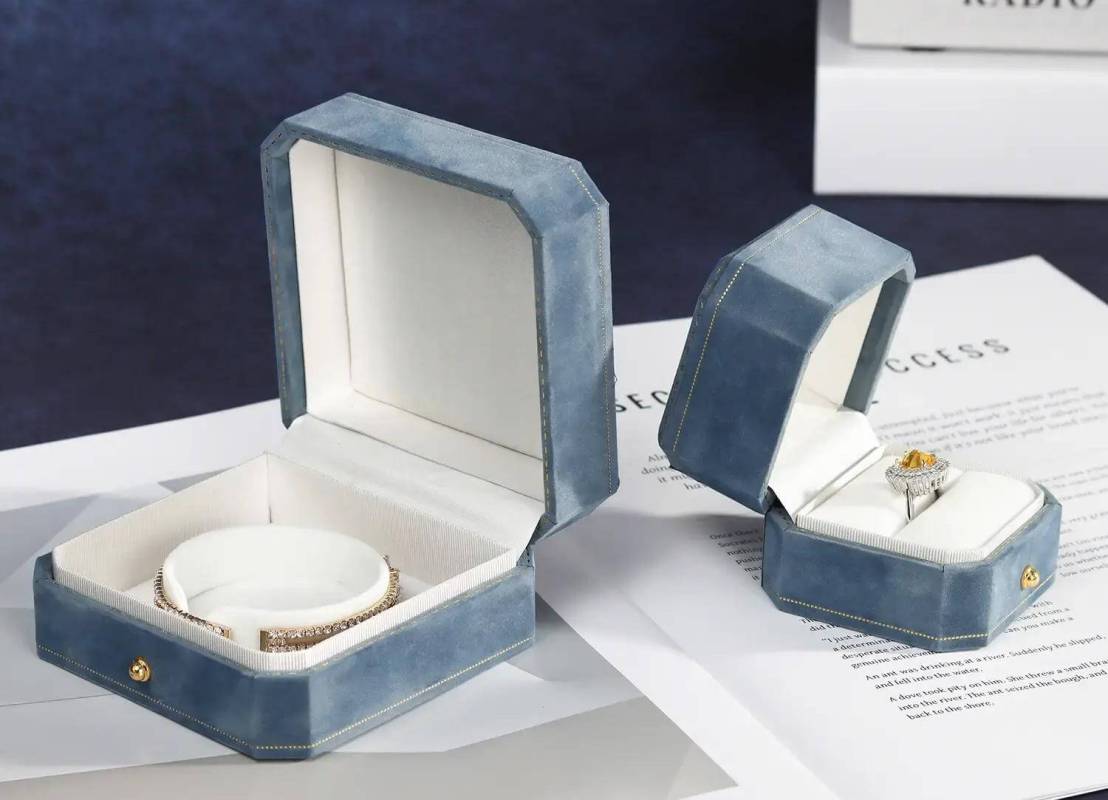
The key to selecting the right velvet lies in aligning its characteristics with your brand’s needs:
- Prioritize silk velvet for high-end, exclusive jewelry where luxury is non-negotiable.
- Opt for polyester velvet for durable, affordable packaging for everyday or travel use.
- Choose cotton or FSC-certified viscose velvet for eco-conscious brands seeking natural materials.
- Go for viscose velvet if you want a balance of silk-like luxury and practicality.
- Use crushed velvet to add texture and drama to statement or seasonal packaging.
By understanding the unique traits of each velvet type, jewelry brands can create packaging that not only protects their products but also reinforces their identity—turning a simple box into a memorable part of the customer experience.
If you are looking for the best type of velvet for your brand packaging, or want to explore sustainable velvet suppliers, please contact us to customize your brand packaging.