

How to Maintain Velvet Jewelry Packaging: Preserving Luxury and Longevity

Velvet remains a staple in luxury jewelry packaging, prized for its soft texture, rich appearance, and ability to cradle delicate pieces like diamonds, pearls, and gemstones. However, its plush pile and porous fibers make it vulnerable to damage—dust buildup, stains, moisture, and crushing can quickly diminish its elegance. For jewelry brands aiming to protect their packaging investment and consumers seeking to preserve keepsake boxes (e.g., engagement ring boxes, heirloom storage), proper maintenance is critical. This article outlines professional, actionable steps to maintain velvet jewelry packaging, from daily care to stain removal and long-term storage, ensuring it retains its luxurious appeal for years.
1. Daily Care: Preventing Damage Before It Occurs
The key to maintaining velvet packaging is proactive daily care—small, consistent habits that prevent common issues like dust accumulation and fiber wear. Velvet’s pile (the raised fibers) traps dust easily, and frequent handling can flatten or mat the texture, so gentle, intentional care is essential.
A. Dusting: Keep Pile Fresh and Clean
Dust is the most common threat to velvet, as it lodges deep within the fibers and can cause discoloration over time. Traditional dusting tools (e.g., feather dusters) often push dust further into the pile; instead, use these targeted methods:
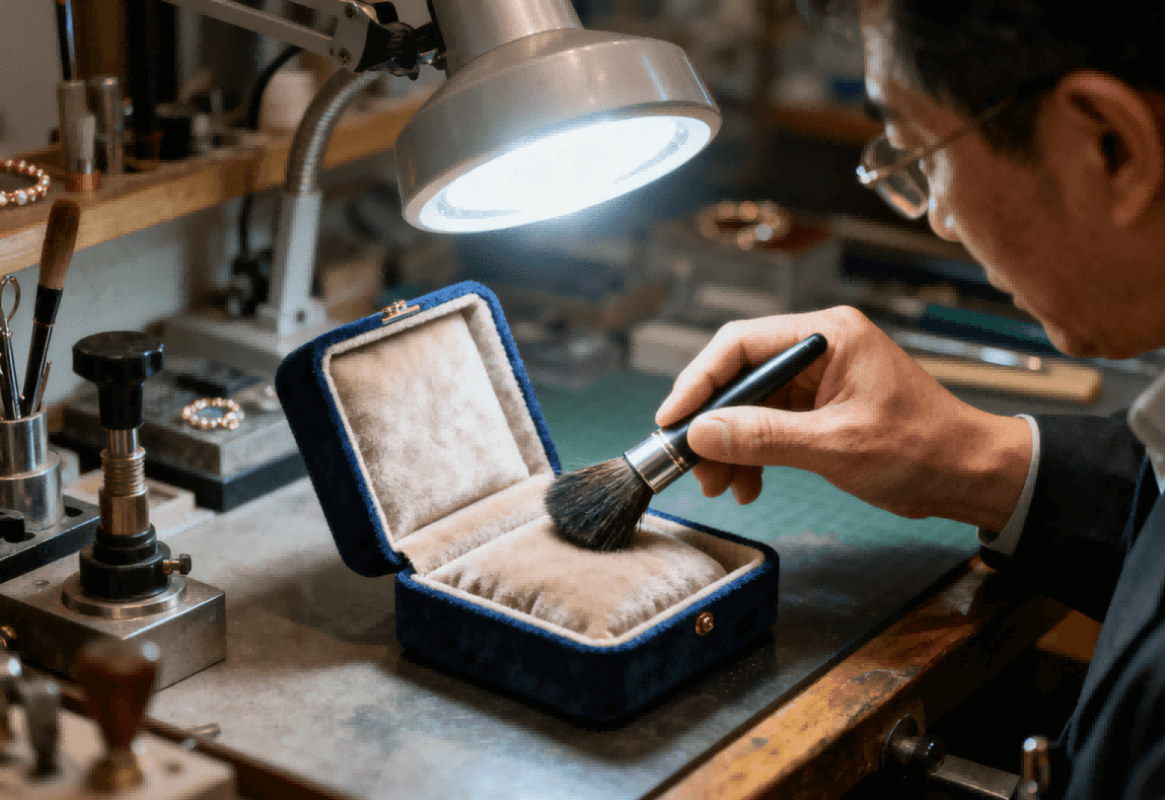
- Soft-bristle brush: Use a clean, natural-bristle brush (e.g., a makeup brush with soft synthetic bristles or a specialized velvet brush) to gently sweep dust from the packaging. Brush in the direction of the pile (not against it) to avoid tangling or breaking fibers. For example, if the velvet’s pile lies from top to bottom on a box lid, brush downward to lift dust without damaging the texture.
- Lint roller (for light dust): For surface dust on smooth velvet (e.g., a velvet-lined jewelry tray), use a low-adhesion lint roller. Press lightly—excessive pressure can flatten the pile. Avoid using sticky tape, as it may pull out fibers.
- Vacuum (for deep cleaning): For larger velvet pieces (e.g., a velvet jewelry organizer) or heavy dust buildup, use a vacuum cleaner with a soft brush attachment set to low suction. Hold the attachment 1–2 inches above the velvet (do not press it into the pile) to suck up embedded dust. This method is safe for quarterly deep cleans but should not be used more frequently, as over-vacuuming can weaken fibers.
B. Handling: Minimize Wear and Tear
Velvet is sensitive to friction and oil, so how you handle the packaging directly impacts its longevity:
- Wash hands before touching: Natural oils from skin can transfer to velvet, leaving greasy spots that attract dust. Always wash and dry hands thoroughly before opening or handling velvet jewelry boxes.
- Avoid excessive touching: Limit contact with the velvet surface—hold boxes by their edges or handles (if equipped) instead of gripping the velvet itself. For example, when opening a velvet-lined ring box, use your fingertips to lift the lid by the edge, not the velvet interior.
- Prevent crushing: Never stack heavy objects on top of velvet packaging, as this will flatten the pile permanently. Even leaning items against a velvet box (e.g., a perfume bottle on a vanity) can create indentations. Store velvet boxes in a way that keeps their shape—use dividers or shelf liners to prevent them from leaning.

2. Stain Removal: Addressing Spots Without Damaging Fibers
Velvet’s porous fibers absorb stains quickly, but prompt, proper treatment can prevent permanent discoloration. The key is to avoid harsh chemicals or excessive moisture, which can damage the fabric or cause bleeding (for dyed velvet). Below are solutions for common stains in jewelry packaging:
A. Grease/Oil Stains (e.g., Fingerprints, Jewelry Polish)
Grease stains are common on velvet used to store jewelry (e.g., oil from skin or residue from polishing cloths). To treat:
- Blot immediately: Use a clean, dry microfiber cloth to gently blot the stain—do not rub, as this will spread the oil deeper into the fibers.
- Apply talcum powder or cornstarch: Sprinkle a small amount of talcum powder (or cornstarch for sensitive colors) over the stain, ensuring full coverage. Let it sit for 4–6 hours (or overnight for tough stains) to absorb the oil.
- Brush away powder: Use a soft-bristle brush to sweep the powder off in the direction of the pile. Repeat if the stain remains—avoid adding water, as it can set grease stains.
Note: For dark velvet, test talcum powder on an inconspicuous area (e.g., the bottom of the box) to ensure it does not leave a white residue.
B. Water Stains (e.g., Spilled Drinks, Humidity)
Water stains on velvet appear as dark, ring-shaped marks. The goal is to rehydrate the fibers evenly to blend the stain:
- Dampen a clean cloth: Use distilled water (tap water may contain minerals that leave deposits) to lightly dampen a white microfiber cloth—do not soak it.
- Blot the stain gently: Press the damp cloth onto the water stain, moving in small, circular motions. Avoid rubbing, as this can distort the pile.
- Air-dry flat: Lay the velvet packaging flat on a clean, dry towel (avoid direct sunlight or heat sources like hair dryers, which can fade colors or shrink fibers). Reshape the pile with a soft brush once dry.
For excessive moisture (e.g., a box left in a humid bathroom), place a silica gel packet inside the box to absorb moisture before drying.
C. Ink Stains (e.g., Pen Marks, Label Residue)
Ink stains are tricky, but alcohol-based solutions can break down the pigment without damaging velvet—only use this method on colorfast velvet:
- Test for colorfastness: Apply a drop of isopropyl alcohol (70%) to an inconspicuous area (e.g., the inside of the box lid). If the color does not bleed onto the cloth, proceed.
- Dab the stain: Moisten a cotton swab with alcohol and gently dab the ink stain—do not rub, as this will spread the ink.
- Blot with water: Use a damp cloth to remove alcohol residue, then air-dry flat.
Never use bleach or ammonia on velvet—these chemicals will discolor or dissolve the fibers.
3. Storage: Protecting Velvet Packaging Long-Term
Proper storage is critical for preserving velvet packaging, especially if it is not used regularly (e.g., heirloom boxes, seasonal gift sets). The goal is to shield it from dust, moisture, sunlight, and pests.
A. Choose the Right Storage Environment
- Temperature and humidity: Store velvet packaging in a cool, dry area with consistent humidity (40–50%). Avoid bathrooms, basements, or near heating/cooling vents—extreme temperatures or humidity can cause mold growth, fiber shrinkage, or color fading.
- Avoid direct sunlight: UV rays fade velvet colors quickly. Store boxes in a dark cabinet or wrap them in acid-free tissue paper (regular tissue may contain dyes that transfer) if displayed on a vanity.
B. Use Protective Coverings
- Dust bags: Store individual velvet boxes in breathable cotton dust bags (avoid plastic bags, which trap moisture). For example, a velvet engagement ring box can be placed in a small cotton bag to prevent dust buildup when not in use.
- Shelf liners: Line storage shelves with acid-free paper or velvet shelf liners to prevent the box from sticking to the surface and to add a layer of protection.
C. Maintain Shape and Pile
- Avoid stacking: As mentioned earlier, stacking velvet boxes crushes the pile. Use open shelves or drawer dividers to keep boxes upright and separate.
- Reshape periodically: If a box is stored for months, remove it every 3–6 months to dust, reshape the pile with a soft brush, and check for mold or pest damage (e.g., moth larvae, which can eat natural fibers like cotton velvet).
4. Restoring Worn Velvet: Reviving Pile and Texture
Over time, even well-maintained velvet may show signs of wear—flattened pile, fuzziness, or minor matting. These issues can often be reversed with simple revival techniques.
A. Refresh Flattened Pile
- Steam gently: Use a handheld garment steamer (set to low heat) to lightly steam the velvet surface. Hold the steamer 6–8 inches away from the pile to avoid direct contact. The steam will relax the fibers, allowing you to reshape the pile with a soft brush.
- Use a hairbrush (for small areas): For localized flattening (e.g., around the edge of a box lid), use a clean, soft hairbrush to brush the pile in the direction of the fibers—this will lift matted areas.
B. Remove Fuzz or Loose Fibers
- Trim loose threads: Use small, sharp scissors to carefully trim any loose or frayed fibers—do not pull them, as this can create holes.
- Lint roller for fuzz: A low-adhesion lint roller can remove surface fuzz without damaging the pile.
5. Common Mistakes to Avoid
Even well-intentioned care can damage velvet if done incorrectly. Avoid these common pitfalls:
- Using harsh cleaning products: Bleach, ammonia, or fabric softeners will break down velvet fibers and fade colors. Stick to mild, alcohol-based solutions or distilled water.
- Machine washing or drying: Never put velvet packaging in the washing machine or dryer—this will destroy the pile and shape.
- Ignoring stains: Delaying stain treatment allows the pigment to set into the fibers, making it nearly impossible to remove later.
- Storing in plastic: Plastic bags trap moisture, leading to mold growth or mildew. Always use breathable materials like cotton.

Conclusion
The key to success is consistency: small, regular care habits will prevent costly damage and ensure that velvet packaging continues to enhance the beauty of the jewelry it holds. Whether it’s a Tiffany Blue velvet ring box or a custom velvet-lined necklace case, proper maintenance turns a functional container into a timeless keepsake.
If you are looking for velvet jewelry packaging boxes, you can visit our official website. We have specially classified products in this category on our official website, welcome to click to learn more.