What Are the Differences Between Jewelry Boxes of Different Prices?

In the jewelry packaging industry, jewelry boxes span a vast price spectrum—from a few dollars to thousands of dollars. This gap is not arbitrary; it reflects fundamental differences in material quality, craftsmanship, functional design, and brand value. For consumers (seeking storage) and jewelry brands (selecting packaging), understanding these differences is critical to matching budget with needs—whether it’s a basic box for everyday jewelry or a luxury keepsake for heirlooms.
1. Budget-Friendly Jewelry Boxes (Under $20)
Budget-friendly boxes prioritize affordability and basic functionality. They are designed for short-term use, mass-market jewelry (e.g., costume jewelry, fast-fashion pieces), or brands targeting price-sensitive consumers. The low price is achieved through cost-cutting in materials, manufacturing, and features.
Core Characteristics
- Materials: Low-cost, mass-produced options dominate.
- Exteriors: Thin cardboard (uncoated or lightly coated), low-grade plastic (e.g., PET or PVC), or synthetic fabrics (e.g., polyester “velvet” or faux leather with a paper backing).
- Interiors: Thin felt (often synthetic), plain cotton, or no lining at all. Anti-tarnish features are rare—these boxes offer minimal protection for precious metals.
- Hardware: Plastic hinges, snap closures, or no hardware (simple fold-over lids).
- Craftsmanship: Automated, low-precision production.
- No hand-finishing—edges may be rough, prints (if any) are low-resolution or prone to peeling, and linings are glued hastily (often with visible adhesive).
- Minimal customization: Limited color options (black, white, basic red) and no engraving or embossing (or only low-quality printed logos).
- Functionality: Basic storage only.
- Simple compartments (if any)—often a single open space or generic slots that don’t fit specific jewelry types (e.g., rings sliding around in a necklace slot).
- No durability: Cardboard bends easily, plastic cracks over time, and synthetic fabrics fray with minimal use.
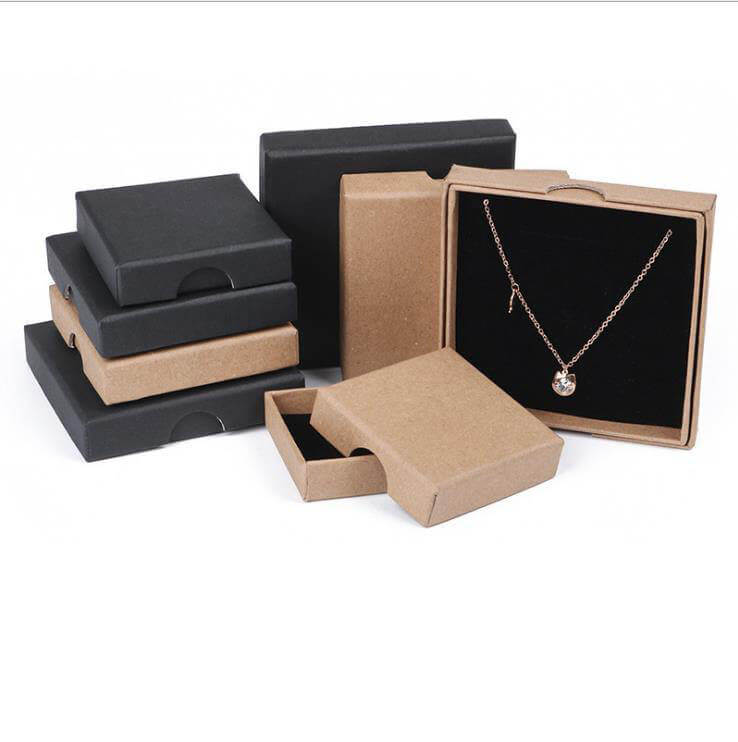
2. Mid-Range Jewelry Boxes ($20–200)
Mid-range boxes strike a balance between quality and affordability. They cater to consumers seeking durable, reusable storage for fine jewelry (e.g., sterling silver, small gemstones) and brands positioning themselves as “accessible luxury” (e.g., independent jewelry designers, mid-tier retailers). The price reflects better materials, improved craftsmanship, and added functionality.
Core Characteristics
- Materials: Higher-grade, more durable options.
- Exteriors: Thick, coated cardboard (water-resistant), genuine leather (lower-grade, e.g., split-grain), real wood (pine, plywood), or high-quality faux leather (with a fabric backing).
- Interiors: Soft velvet (cotton or rayon blend), satin, or felt with anti-tarnish treatment (for silver jewelry). Linings are neatly attached, with no loose threads.
- Hardware: Metal hinges, magnetic closures, or brass snaps—sturdier than plastic and designed for repeated use.
- Craftsmanship: Semi-automated production with partial hand-finishing.
- Clean edges, smooth linings, and crisp prints/embossments. Customization is accessible: laser engraving (for initials or logos), limited color options (e.g., burgundy, navy, natural wood tones), and small decorative details (e.g., a gold foil border).
- Consistent quality control—fewer defects (e.g., misaligned hinges, peeling linings) than budget boxes.
- Functionality: Practical, user-friendly design.
- Customized compartments: Ring slots with foam inserts, necklace hooks to prevent tangling, and small drawers for earrings. Some boxes include travel-friendly features (e.g., compact size, secure closures).
- Durability: Designed for reuse—wood resists bending, leather ages gently (develops a slight patina), and coated cardboard withstands minor spills.
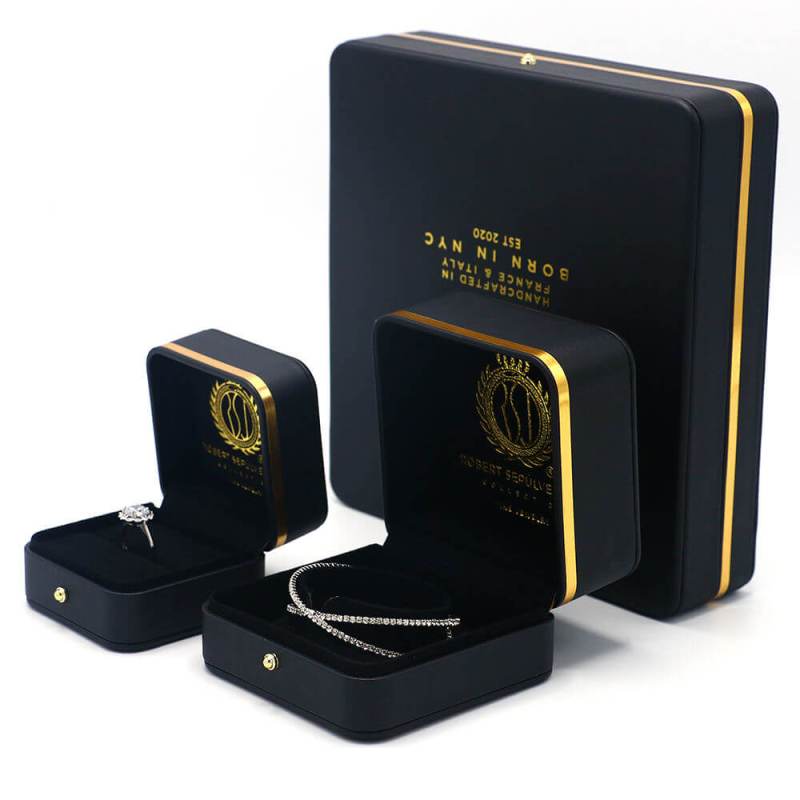
3. Luxury Jewelry Boxes ($200+)
Luxury boxes are investments in craftsmanship, exclusivity, and brand heritage. They are associated with high-end jewelry brands (e.g., Cartier, Tiffany & Co.) or heirloom pieces (e.g., diamond engagement rings, vintage jewelry). The price reflects premium materials, artisanal craftsmanship, and symbolic value—these boxes are often keepsakes in their own right.
Core Characteristics
- Materials: Rare, high-quality, or exotic options.
- Exteriors: Full-grain leather (top-tier, ages beautifully), exotic woods (e.g., walnut, mahogany, or teak), metal (brushed silver, gold-plated, or stainless steel), or even precious materials (e.g., mother-of-pearl inlays).
- Interiors: Luxury fabrics—100% silk, high-grade velvet (e.g., crushed velvet), or anti-tarnish linens. Some boxes include custom inserts (e.g., molded foam to fit a specific diamond ring’s setting).
- Hardware: Handcrafted metal components—solid brass hinges, gold-plated latches, or even gemstone accents (e.g., small sapphires on a clasp).
- Craftsmanship: Artisanal, hand-finished production.
- Hours of handwork: Hand-carved wood details, hand-stitched leather, hand-painted designs, or hand-engraved metal. Customization is limitless—bespoke engravings (e.g., wedding vows), matching the box to the jewelry’s design (e.g., a floral inlay for a floral-patterned necklace), or even incorporating family heirloom materials (e.g., a swatch of vintage fabric).
- Strict quality control: Each box is inspected for perfection—no visible seams, no uneven engravings, and materials that meet the brand’s heritage standards (e.g., Tiffany’s signature blue leather).
- Functionality: Premium, long-term storage with symbolic value.
- Bespoke design: Inserts tailored to the exact dimensions of the jewelry (e.g., a box made to fit a specific diamond bracelet’s links). Some boxes include advanced features (e.g., built-in humidity control for pearls, lockable compartments for high-value pieces).
- Heirloom durability: Designed to last generations—full-grain leather develops a rich patina, exotic wood hardens over time, and metal resists corrosion. These boxes are often passed down with the jewelry.
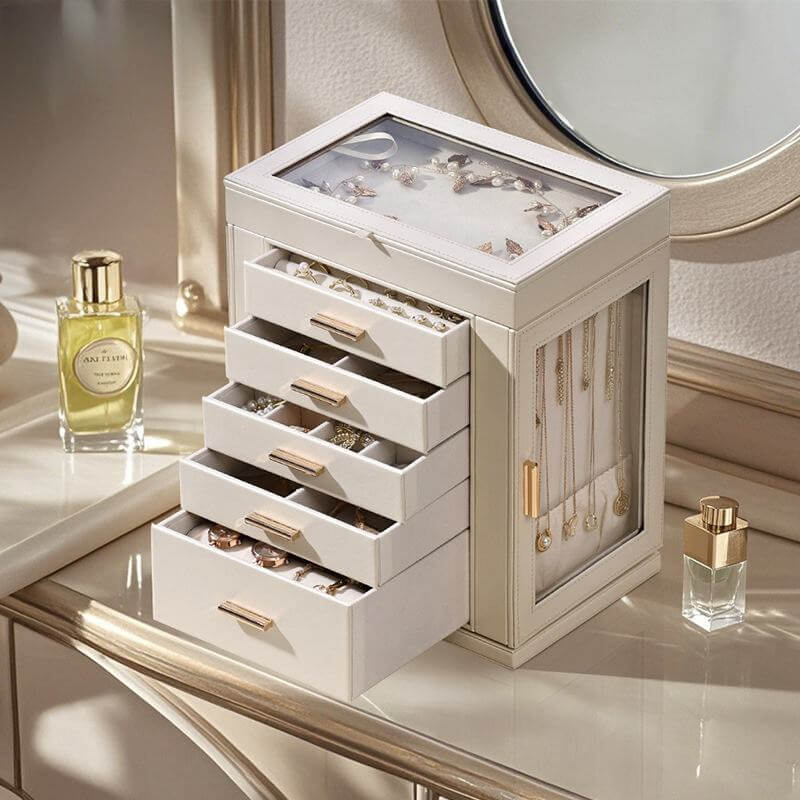
Conclusion
The difference between jewelry boxes of different prices is far more than “cost”—it’s about intended use, durability, and emotional value. Budget boxes serve a temporary, functional purpose; mid-range boxes balance practicality with long-term use; and luxury boxes become part of the jewelry’s story, blending craftsmanship with sentiment.
For consumers, the choice depends on the jewelry’s value (sentimental or financial) and how they plan to use the box. For brands, price-tiered boxes align with their positioning—budget boxes for entry-level lines, mid-range for accessible luxury, and luxury for high-end collections. Ultimately, a jewelry box’s price reflects the value it adds to the jewelry it holds—whether that’s basic protection or a lifetime of memories.
If you need help choosing a jewelry box based on a specific budget or purpose, you can click to contact our professional team to serve you.